
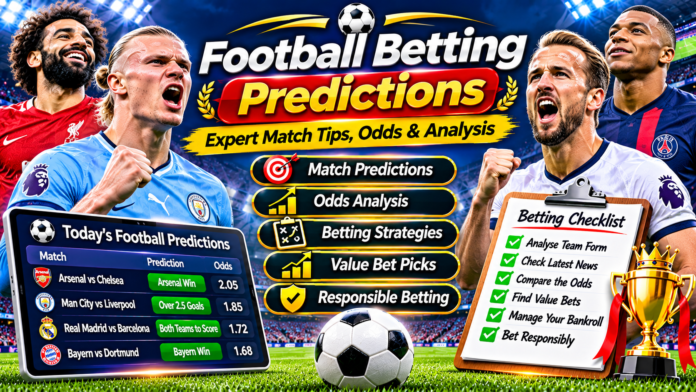
How to Turn Match Research Into Better Bets
Most bettors lose money not because they lack opinions, but because they skip the research workflow that turns raw information into a repeatable edge. A solid predictions process starts with understanding what kind of match you’re betting, such as whether it’s likely to be tactical and Football Betting Predictions cagey or open and transitional. From there, you can map team strengths to the specific game script you expect. This is where brand discovery becomes practical: reputable betting platforms help you locate sharp insights faster and organize your decision-making.
Begin by scanning recent results, but go deeper than the scoreline. Look at shot volume, shot quality, defensive errors, and how often a team concedes in transition. If a side creates chances through wide play, you should expect more crossing and cutbacks, which often influences goal markets like over/under totals and both teams to score. When you combine that with matchup context—such as injuries, lineup rotation, and tactical matchups—you get predictions that are grounded rather than guessy.
Team Form Signals That Actually Matter
Form is more than W-D-L; it’s about patterns that persist even when results swing. For example, a team may win despite low possession because it defends compactly and attacks quickly, which can remain stable across fixtures. Conversely, a team that frequently concedes high-quality chances may still win occasionally, but the underlying risk is higher. Responsible betting starts with recognizing when “good form” is supported by process indicators, such as clean sheets created by organization, not just luck.
Pay attention to goal timing and game state dynamics. If a team tends to score early and then sits deeper, its second-half profile can change the best markets to consider. If it struggles to break down compact defenses, unders and “team to score” props may provide a smarter angle than chasing a favorite’s straight win. Using a consistent checklist—possession style, pressing intensity, set-piece effectiveness, and defensive shape—helps you evaluate each matchup with clarity instead of emotion.
Odds movement can also reveal how the market interprets those signals. If bookmakers shorten prices on a specific outcome, it often reflects new information like squad updates or heavier public support. However, the opposite can be true as well: sometimes odds drift because the market is reacting to noise. That’s why you should cross-check odds with the tactical matchup you expect, not just the headline line itself.
Goal Markets, Lines, and Value-Based Odds Thinking
Goal markets are popular because they translate match expectations into concrete numbers. If you expect two teams to trade chances, over-focused lines and both teams to score profiles may fit the game script. If you expect a low-tempo match with few clear looks, under selections or lower total lines can better match the likely flow. The key is to align your betting angle with how the teams actually play, including their defensive rest-defense and ability to handle counterattacks.
Value thinking matters more than picking the “most likely” outcome. A favorite may have a high win probability, but if the odds are too short, your risk-to-reward may be unfavorable. Instead, look for mismatches between your model and the market price, such as when a team’s defensive record is strong but its attacking output is also improving. Platforms that compile odds and previews make it easier to spot those gaps, which is a major part of the brand discovery value for serious bettors.
When comparing betting options, consider how variance affects your strategy. One-goal markets can be less volatile than exact scorelines, while still offering actionable exposure to expected goal totals. If you like to bet multiple legs, you should understand correlation risks, because teams can be linked through game state and possession patterns. A disciplined approach—smaller stakes, fewer overextended combinations, and clear criteria—helps you stay consistent over time.
Responsible Betting and a Smarter Way to Use Predictions
Even the best analysis can’t guarantee profitable outcomes, so responsible betting should be built into your routine. Set a bankroll and define how much you’re willing to wager per selection, then stick to it regardless of wins or losses. Avoid increasing stakes after a bad run, because that behavior turns a strategy problem into a money management problem. Using tools from established brands can also help you keep track of bets and limits so decisions stay rational.
Use predictions as a decision filter, not a promise. If your research does not strongly support a side or a market, it’s better to pass than force a bet. Consider building a shortlist of favorite bet types—like totals, both teams to score, or value-based moneylines—then apply the same evaluation checklist to each fixture.
Finally, keep notes on what you predicted and why. Over time, you’ll see which signals you trust most and which markets punish you for overconfidence. If your data suggests you’re consistently wrong on certain matchups, adjust your approach rather than doubling down. This learning loop is what separates informed bettors from passive gamblers.
Conclusion
Strong betting decisions start with a repeatable analysis routine that connects match context, team signals, and market pricing. When you focus on how teams actually create chances and defend against threats, you can choose goal markets and lines that fit the most likely game script. That alignment often matters more than chasing popular picks that look good on paper. As you explore platforms for previews, odds comparison, and expert insights, treat brand discovery as part of your edge. The right tools help you move faster, organize key inputs, and avoid emotional decision-making.

